Debt Relief Experts

It can be hard to find the right debt relief solution that can help you get out of debt. The licensed insolvency trustees at Hoyes, Michalos & Associates are debt experts who can help you find the safest and best debt relief solution to deal with your debt problems and eliminate your debt.
Government Debt Relief Programs
We would like to offer a word of caution about websites and agencies that advertise Canada federal or government debt relief programs.
The only Canadian government debt relief program is a consumer proposal. A consumer proposal is a formal, legal debt settlement program available under the Bankruptcy and Insolvency Act. It is a safe, reliable debt relief program that allows you to avoid bankruptcy. A proposal is not bankruptcy, but it does provide the same creditor protection as bankruptcy. A consumer proposal can only be filed through a licensed insolvency trustee.
Every person’s financial problems are unique, and as such, no one debt relief program is right for everyone. Thankfully there are number of different programs that are designed to help you get out of debt. Each program comes with it’s own pros and risks. We recommend talking with a Licensed Insolvency Trustee like Hoyes Michalos to explore which option is right for you.
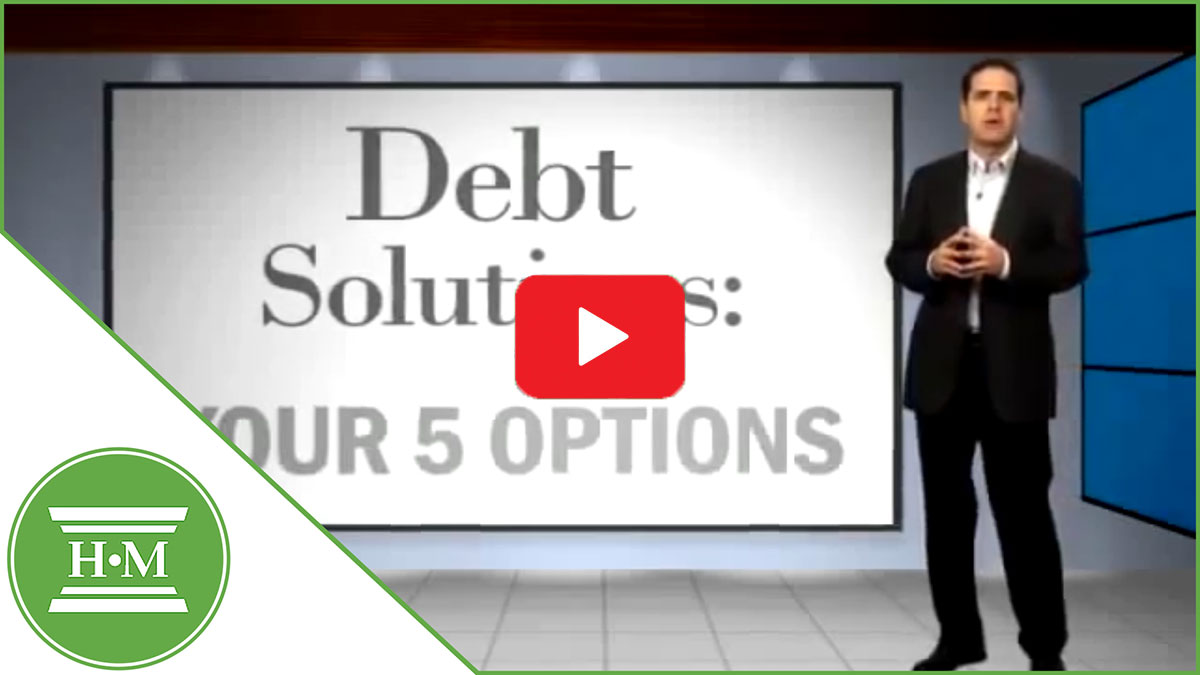
You’ve got debt problems. Maybe you’re just barely making the minimum payments every month, or maybe you’re getting calls from bill collectors and you’re worried that your wages might be garnisheed. What can you do? You’ve got five basic options.
First, you could do nothing. Of course, if you do nothing the collection calls continue and you risk having your bank account seized, your assets taken and having your wages garnisheed. However, if you have no assets and if you have no wages, perhaps because you’re unemployed or on a pension, doing nothing might be the right answer. You could open a new bank account at a new bank, change your phone number and just ignore the letters. Doing nothing doesn’t make your debts go away, but if the people you owe money to can’t get to you, it’s a cheap and effective option, and occasionally it’s what I recommend for someone with no assets and no employment income.
Second, you could deal with your debts on your own. You could make a budget, cut your expenses, get a second job and work to pay off your debts on your own. If your debts are manageable and if you have the ability to increase your income or reduce your expenses, dealing with it on your own is a great idea. You could get a debt consolidation loan to reduce the interest you’re paying and get out of debt faster. Or maybe you can refinance with a second mortgage. Even better, if you have assets to sell, you might be able to sell your car or house or cash in investments and pay off the debt. If you’ve got assets, that may be the best option.
Third, you could get help from an outside agency and do a debt settlement or credit counselling or a debt management plan. Before you go this route, make sure you know who you’re dealing with. Credit counsellors do debt management plans where you repay your debts in full but generally at a reduced or zero interest rate. If you’re talking to a not-for-profit counsellor, ask them if they are a member of the Ontario Association of Credit Counsellors or whatever governing body exists in your area. Over the years I’ve worked with a lot of great not-for-profit credit counsellors and I highly recommend them to many people. However, there are lots of unscrupulous people out there calling themselves credit counsellors, but they have no qualifications whatsoever. They spend lots of money on advertising but all they do is take your money and then refer you to a trustee to go bankrupt. If you want to find out if someone is legit, do a search on the Internet or check out the Better Business Bureau, or give my office a call; we’ll tell you.
A debt settlement is a bit different from a debt management plan. In a debt management plan you repay your debts in full. In a debt settlement you settle your debts for less than the full amount owing. Debt settlements typically work best when you have a lump sum of money that you can offer. If you have a debt that you haven’t made any payments on in a year or more, and if you’ve got some cash, you might be able to make a deal where you pay 50 cents on the dollar or maybe less to wipe out the debt.
If you owe money to lots of different companies you need to make a deal with each of them, which takes time. Of course, if you’re only a month or two behind, it’s less likely your creditors will settle for such a small amount. If you’re working it’s more likely they will want to keep calling you and perhaps even take you to court. So, debt settlement only works in very specific situations.
So, what can you do if you can afford to pay something, but can’t pay in full, you don’t have a lump sum of money, and you want to work out a plan to deal with your debts? The fourth option is a consumer proposal. This is a legal procedure governed by federal law. We figure out what you can afford to pay and then we propose it to your creditors. So, if your total debts are $50,000 on credit cards, bank loans, PayDay loans and income taxes, you might offer to pay $20,00, perhaps $400 a month for 50 months. Each creditor, that’s everyone you owe money to, gets one vote for every dollar you owe, and if more than half of the dollars vote in favour everyone has to take the deal. That’s why a consumer proposal is often better than other options. In a debt management plan or a debt settlement, if one of the creditors says no you’ve got to deal with them yourself. In a consumer proposal, if more than half of the dollars say yes, everyone else is forced to take the deal.
What if you can’t commit to a three or four or five-year repayment plan? The final option is bankruptcy; You still have to pay something each month, but a first bankruptcy generally lasts for either 9 months or 21 months, depending on your income. You lose your tax refund and other assets, and you’re required to submit proof of your income to the trustee each month. But if you have no other choice, bankruptcy is the final option.
Which option is right for you? It depends on your unique situation. So when you call us at Hoyes Michalos we’ll review all of the facts, explain all of the options, and we’ll help you decide which option is right for you.
Top 5 Debt Relief Options in Canada
- Debt Consolidation: A debt consolidation loan is one new loan issued to pay off multiple small loans. Combining smaller loans and bills into one easy to manage payment can help make debt repayment automatic and more affordable. Generally, debt consolidation loans offer a lower interest rate and payment can be spread out over a longer period of time. It can be a good credit card debt solution as long as it deals with all of your outstanding debts. The risk is that a debt consolidation option does not eliminate your debt, it just makes repayment more manageable. You will also need to apply and qualify in order to take advantage of this option.
- Credit Counselling: Credit counselling is when a non-profit credit counsellor summarizes your debts and prepares a multi-year repayment plan for you. A credit counsellor will offer a solution called a debt management plan or DMP which allows you to pay back your debts over a period of three to five years. Your credit counsellor presents this option to your creditors and, if accepted, you make one monthly payment to the credit counselling agency. A debt management program is not a form of debt cancellation or debt reduction. You will still have to pay off all of your debt, but sometimes the interest relief received is enough to allow you to solve your debt problems.
- Debt Settlement: A debt settlement solution is an informal arrangement made with your creditors to pay back a portion of your debt. However, this arrangement is not guaranteed and fees are required to complete the process. If you have a lump sum of money already available, you can try to negotiate a settlement with your creditors on your own however we do not recommend most debt settlement companies as a trusted debt solution. Many charge high fees to refer people to a licensed insolvency trustee to file a consumer proposal.
- Consumer Proposal: A consumer proposal is a legally binding settlement between you and your creditors to pay back a portion of your debts, over a period of up to five years. At the end of the proposal period your debts are forgiven (technically discharged) and you can begin to rebuild your credit score. A consumer proposal is often the safest and cheapest debt relief option when dealing with debt.
- Personal Bankruptcy: Bankruptcy is considered the last resort option when dealing with debt. In Canada, filing bankruptcy is a legal process regulated by the federal government. It offers the honest, but unfortunate debtor protection from creditors and a discharge of all debts at the end of the bankruptcy term.
Each of these alternatives has its own benefits and risks of debt relief. Talking to a licensed professional is the best way to ensure you choose the solution that fits your needs.
Eliminate Your Debt
The best debt solution for you should solve all of your debt problems. Reducing interest through a debt consolidation loan is good, but not if it doesn’t ultimately eliminate your debt. Dealing with some credit card debt and outstanding bill payments is great, but not if you are left with large unpaid tax debts. And what if you have been unable to pay back your student loans even after years of trying?
We can help you eliminate:
- Credit card debt;
- Tax debts such as income tax debt, HST, and source deductions;
- Car loan shortfalls;
- Outstanding bill payments;
- Government guaranteed student debt as long as you have been out of school for seven years; and
- Payday loans.
You have a debt problem, or are going to have one, if:
- You spend more money than you have coming in;
- You use credit cards as a necessity, rather than a convenience;
- You borrow money to make it from one payday to the next;
- Creditors are threatening to garnish your wages, sue you or repossess your car, furniture or house;
- You pay only the interest or monthly minimums on your credit card debt or line of credit;
- You’re receiving phone calls from collection agents hired to collect payment of your debt;
- Utility companies cut off service because your bills have gone unpaid.
If you have experienced any of these situations, then it is time to seek debt help from our licensed and experienced professionals.
Better Debt Relief Services
There are many unlicensed debt consultants in Canada offering to help you through the consumer proposal process. However they charge large fees, only to refer you to a licensed insolvency trustee. At Hoyes Michalos we want your consumer proposal to be successful. That means negotiating proposal terms that you can afford, and that will be acceptable to the creditors. It is this middle ground that we are experts in achieving which is why we have a 99% consumer proposal acceptance rate and why our clients have a high completion rate.
As you have now learned, bankruptcy is just one of the multiple debt relief options available to you. It should be used as a last resort, and it will only be recommended by us if none of the other debt relief alternatives can work. A licensed insolvency trustee can determine how to get out of debt in your specific situation.
Our clients feel the relief of getting out of debt at their very first meeting. Our Debt Free in 30 approach to reviewing your options will help you find better ways to manage your debt problems. We are confident that our friendly and understanding professionals can help you choose the correct debt solution for your individual situation.
Contact us today and get a FREE, no obligation consultation. We can help to start you on the road to a more secure financial future, debt free.
Hoyes Michalos & Associates provides debt solutions and debt relief services in the following locations
Other service areas
We offer the convenience of phone and video-conferencing only services for the following additional areas. Many people find it advantageous to begin the initial consultation and debt assessment over the phone or by video. If you decide to file, you can sign and complete your paperwork electronically. Credit counselling sessions can also be completed through video conferencing, which eliminates the need to miss work or schedule a time to attend the office.